Two Centuries of Moduli
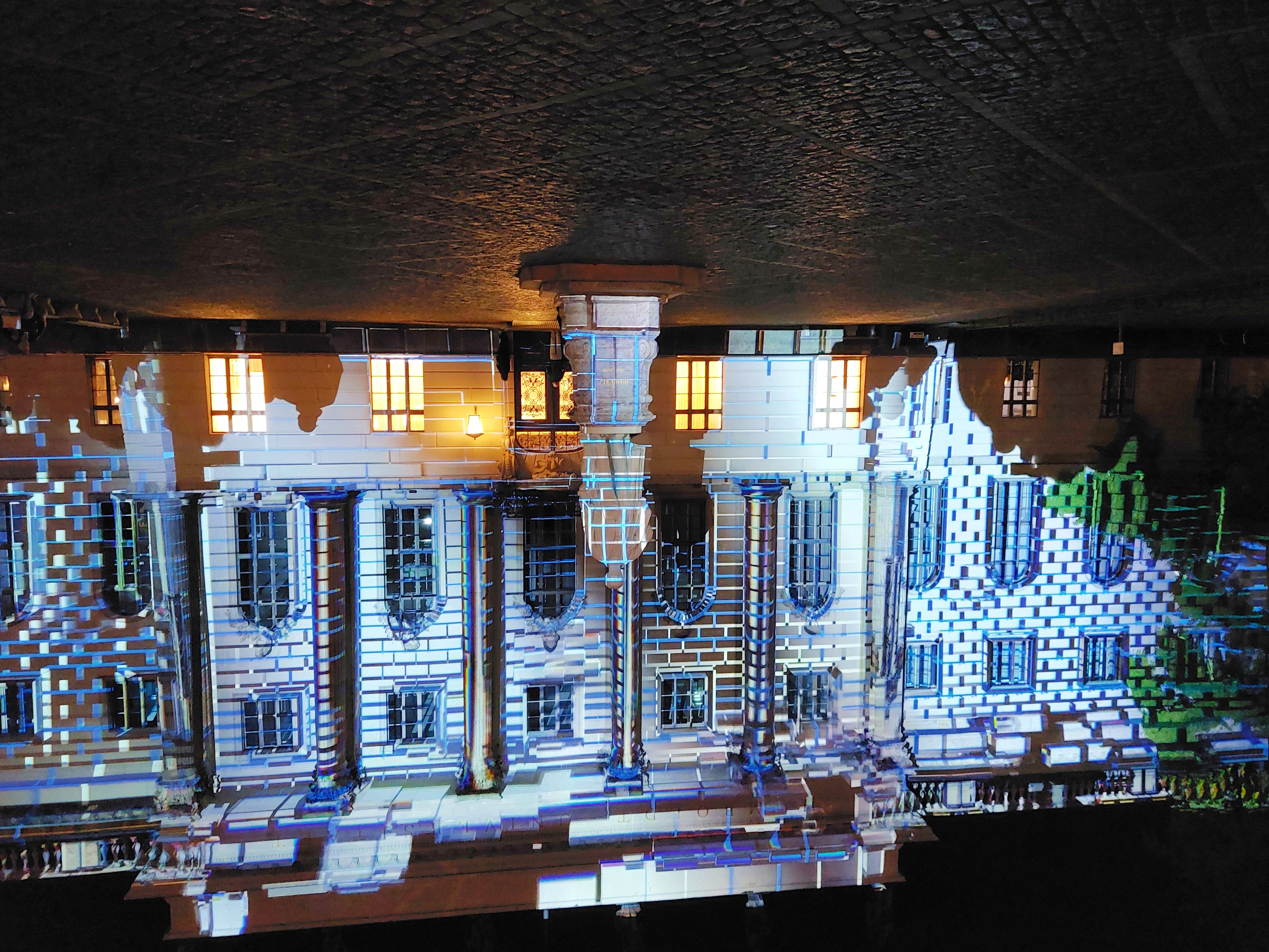
Humboldt-Universität zu Berlin
7th - 11th September 2026
A conference on the occasion of the 200th anniversary of Crelle's journal
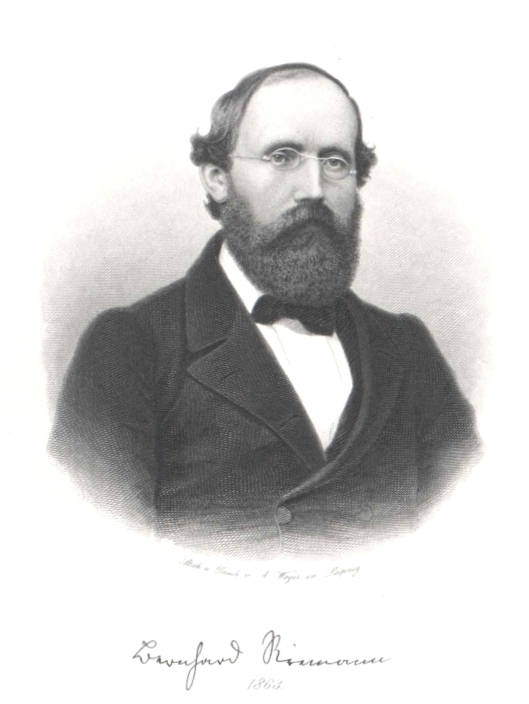
and the 200th anniversary of Riemann
Speakers
| | | |
| Jarod Alper (Seattle) | | Sam Payne (Michigan) |
| Benjamin Bakker (Chicago) | | Dhruv Ranganathan (Cambridge) |
| Sam Grushevsky (Stony Brook) | | Richard Thomas (London) |
| Nigel Hitchin (Oxford) | | Gerard van der Geer (Amsterdam) |
| Bruno Klingler (HU Berlin) | | Claire Voisin (Paris) |
| János Kollár (Princeton) | | Anna Wienhard (Leipzig) |
| Davesh Maulik (MIT) | | Chenyang Xu (Princeton) |
| Rahul Pandharipande (Zürich) | | Anton Zorich (Paris) |
| | |
| | |
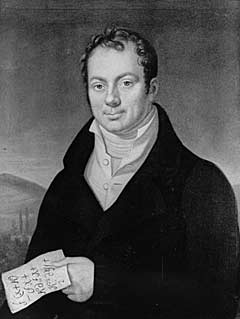
In 1826, August Leopold Crelle founded in Berlin the journal that still bears his name. For a very long time, Crelle's journal has been
intimately linked to the University of Berlin and to the Berlin Academy of Sciences and Humanities. This conference will focus on the recent development
of prominent moduli spaces in mathematics, starting from the moduli space of curves, which, building on earlier work of Abel and Jacobi,
was introduced by Bernhard Riemann in 1857 in his fundamental paper Theorie der Abelschen Functionen
published in Crelle's journal.
On Friday, September 11th, the Foundation Compositio Mathematica will award the
Algebraic Geometry Prize for the best paper
published in the journal Algebraic Geometry.
Schedule
Abstracts
click to show or hide
János KollárModuli of varieties of general type We give an overview of the KSBA moduli theory of higher dimensional varieties, with special emphasis on the puzzling observation: The surface theory seems the hardest of them all.
Benjamin BakkerDeformations of fibered Calabi--Yau manifolds A number of years ago, Kollár proved that any small deformation of an elliptically fibered Calabi--Yau variety X is also elliptically fibered, provided $H^2(X,\mathcal{O}_X)=0$. We show the same is true for any fibration of a Calabi--Yau manifold. More generally, without any assumption on $H^2(X,\mathcal{O}_X)$, any small deformation of a semiample bundle remains semiample up to numerical equivalence. I will describe the proof using some Hodge theory and the T1 lifting criterion of Kawamata--Ran, as well as discuss some related questions. This is joint work with Kristin DeVleming, Stefano Filipazzi, Radu Laza, Jennifer Li, Roberto Svaldi, Chengxi Wang, and Junyan Zhao.
Gerard van der GeerModuli spaces and modular forms Moduli spaces of curves and abelian varieties come with a Hodge bundle and thus come with modular forms. We will use the geometry of such moduli spaces to construct scalar and vector valued modular forms. Joint work with Cléry, Faber and Kouvidakis.
Anton ZorichGeometry of random hyperbolic and flat surfaces of large complexity Consider a random hyperbolic surface of large genus (where "random" is understood in terms of the Weil-Petersson volume on the moduli space). We know its curvature and its area, but what can be said about its diameter, systole, Cheeger constant, first nonzero eigenvalue of the Laplacian?
Following pioneering works of Maryam Mirzakhani a lot of progress was obtained in recent years in unveiling geometry of random hyperbolic surfaces of large genus or of fixed genus but with many cusps. After a presentation of selected recent results of my colleagues concerning hyperbolic geometry, I will announce the first results on geometry of random flat surfaces where "random" is understood in terms of the Masur--Veech volume on the moduli space of quadratic differentials in large genus or in genus zero but with large number of poles. Based on joint work in progress with Giovanni Forni and Kasra Rafi.
Chenyang Xu Stable degeneration of symplectic singularities and Kaledin's conjecture (Joint work with Ziquan Zhuang) We will explain a proof of Kaledin's conjecture which says that every symplectic singularity is analytically isomorphic to a conical symplectic singularity. A key tool is K-stability theory (in local setting). More precisely, we show the stable degeneration of a symplectic singularity gives a conical symplectic singularity, which is analytically isomorphic to the original one and admits a canonical good torus action.
Nigel HitchinA universal Higgs bundle moduli space Gauge-theoretic constructions introduce metrics on moduli spaces. The talk will apply the geometry of the hyperkähler metric on the moduli space of Higgs bundles over a curve, and its 3g-3-dimensional family of deformations, to define the holomorphic structure on the universal family over Teichmüller space introduced algebraically by Simpson.
Bruno KlinglerConstructing algebraic cycles from variations of Hodge structures Given a smooth algebraic variety over the complex numbers, I will explain how to construct natural finitely generated subrings of its Chow ring using Hodge theory.
Sam PayneCombinatorial and motivic structures in the cohomology of moduli spaces I will discuss recent and ongoing work on combinatorial and motivic structures in the unstable cohomology of moduli spaces of curves and principally polarized abelian varieties. Boundary stratifications, tropical geometry, and graph complexes make parts of the weight filtration accessible, while gluing and product operations reveal further algebraic structure. These methods yield new vanishing and nonvanishing results, exponential growth in families of cohomology groups, and arithmetic consequences for point counts over finite fields.
Richard ThomasThe MNOP conjecture and commuting vector fields If a connected abelian Lie group A acts on a compact manifold M, we can sometimes localise the characteristic classes of M – particularly its Euler class – to the fixed locus of the action.
If dim A=1 we can apply the Poincaré-Hopf theorem to the resulting vector field on M.
If A is compact (i.e. a torus) we can use Atiyah-Bott-Berline-Vergne localisation in equivariant cohomology.
If M is complex Baum-Bott-Illusie localise to the locus in M where the A-action drops rank, rather than the smaller locus where the rank drops to zero.
Bonatti has solved the problem for real analytic actions with rank A=2 and dim M≤4. The general case seems to be underappreciated and wide open. I will explain an approach in the complex case, and some virtual motivation from the Maulik-Nekrasov-Okounkov-Pandharipande conjecture in enumerative algebraic geometry. Different parts of this project are joint work with Francesca Carocci, Yifan Zhao and Maurício Corrêa.
Sam GrushevskyCohomology of moduli of differentials A stratum of differentials is the moduli space of curves together with a meromorphic 1-form with prescribed multiplicities of zeroes and poles. These strata admit the action of SL(2,R), the study of which is the subject of Teichmuller dynamics, while algebro-geometrically they give a rich supply of subvarieties of moduli of curves. We construct interesting cohomology of strata of differentials, and of their compactifications. This is joint work with Prabhat Devkota.
Davesh MaulikFourier transforms for hyperkahler varieties In this talk, I want to discuss some applications of a Fourier-Mukai transform for hyperkahler varieties of K3^[n] type, first developed by Markman. This package is loosely analogous to the classical theory for abelian varieties, with the Poincare line bundle replaced by a special hyperholomorphic bundle. These ideas lead to a proof of the Bondal-Orlov D-equivalence conjecture for these varieties (joint with Junliang Shen, Qizheng Yin, and Ruxuan Zhang), and a proof of a multiplicative version of the Orlov conjecture for homological motives proposed by Fu and Vial (joint work with Shen and Yin). I'll try to state some conjectures at the end, time permitting.
Claire VoisinOn the Chow ring of very general abelian varieties and a question of Pirola On the moduli space of genus 4 curves, there is a rational section of the Kummer fibration (that is, the Jacobian fibration mod. +- Id) given by the difference of the two trigonal divisors. We prove that any rational section of the Kummer fibration is a multiple of this section, solving in the affirmative a question asked by Pirola. A first step for the proof is a result concerning the Chow ring of a very general abelian variety A of dimension at least 4, or very general Jacobian A in genus at least 4 . We prove that a divisor D on A that satisfies $D^2=0$ in $CH^2(A)$ must be of torsion.
Rahul Pandharipande When does a line bundle have a section? After Abel, Jacobi, and Riemann I will discuss Abel-Jacobi theory both in the 19th century and then, after Riemann, over the moduli of curves in the 20th century. The question, in the context of the Picard stack, leads directly to the modern theory of the DR cycle with many applications to moduli and enumerative geometry. At the end, I will discuss new ideas related to the DR cycle in higher rank.
Jarod AlperModuli spaces — then and now The formulation of the concept of “moduli” has evolved over the last 200 years, from Riemann to Teichmüller to Baily to Grothendieck to Mumford, and continues to evolve today. After surveying various notions of "moduli"—fine, coarse, categorical, good, adequate, topological, weakly good, non-reductive, ... — we will discuss theorems and conjectures on their existence.
Anna WienhardSurfaces, Lie groups, and moduli spaces of geometric structures The moduli space of Riemann surfaces can be realized as moduli space of hyperbolic structures. Any such structure corresponds to a representation of the fundamental group of the surface into the Lie groups PSL(2,R). We describe moduli spaces associated to more general Lie groups, and the associated geometric structures.
Dhruv RanganathanThe 0-cycle of curves on the quintic and other stories Gromov-Witten theory is an interesting source of cycles on the moduli space of curves. For example, one can consider the 0-cycle given by "virtually" summing all curves of fixed degree and genus that lie on the quintic threefold. Recent advances in the study of logarithmic moduli spaces provide new ways of controlling the classes of such cycles in the Chow group of the moduli space of curves. I will give an introduction to this package of techniques and sketch a proof that, perhaps surprisingly, the 0-cycle of curves on the quintic is proportional to the top Chern class of the tangent bundle. Based on joint work with Davesh Maulik.
Location
All lectures of the conference take place in the historic Weierstraß Hörsaal (3038) in the main building of the Humboldt University:
Address:
Humboldt-Universität zu Berlin
Unter den Linden 6
10117 Berlin
Map
Special Event
On September 10th a special day will be held on the topic From Crelle's Berlin to Modern Moduli, dedicated
to the historical development of the concept of moduli and to the person of August Leopold Crelle. The event takes place in the Einstein lecture hall of the
Berlin-Brandenburg Academy of Sciences and Humanities (BBAW):
Address:
Berlin-Brandeburgische Akademie der Wissenschaften
Jägerstraße 22-23
10117 Berlin
Map
Registration
Please register here. Registration is mandatory and the deadline is July 1st. Participants of the conference should only register on this website, please do not use the registration form linked on the webpage From Crelle's Berlin to Modern Moduli unless you only want to particpate in that event.
|